
Your Nature Guide

Marios Gavalas
Author And Researcher
Nau mai, haere mai
Nau mai, haere mai
I'm Marios, delivering the best of Aotearoa's nature walks to your device.
I've personally walked hundreds of New Zealand's tracks and spent months in libraries uncovering interesting information on New Zealand/Aotearoa. And you'll find a slice of that research on this page - enjoy!
Photos
Information
Rocky Mountain and Diamond Lake
7 km return | 3 hours return to Rocky Mountain Summit
Classic NZ!
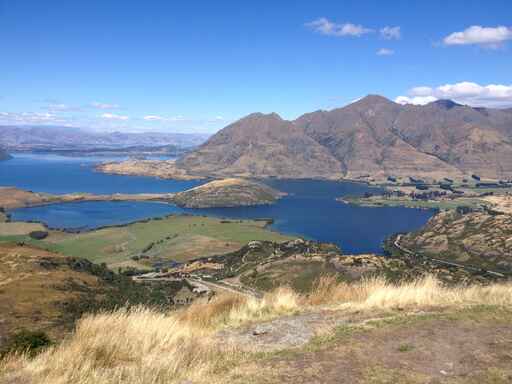
A grunt up Rocky Mountain (775m) is greeted with superlative views over Lake Wanaka and to the highest peaks of Mount Aspiring National Park, including Mount Aspiring/Tititea.
Walking Track
Timing
Careful in winter. Best only attempt Rocky Mountain when it hasn't been frosty. Otherwise just do the lake circuit or up to Diamond Lake Lookout.
Access
From Wanaka, follow Wanaka Mount Aspiring Road 18.5 km to the signposted parking bay.
Track
There’s a network of tracks here including Diamond Lake Circuit (2.5km 45 minutes return), Diamond Lake Lookout (2 km 1 hour return) and Lake Wanaka Lookout (5km 2 hours return). This track incorporates all the others and includes the best lookout of all at Rocky Mountain.
There is a map of the track network at the stile entering the reserve.
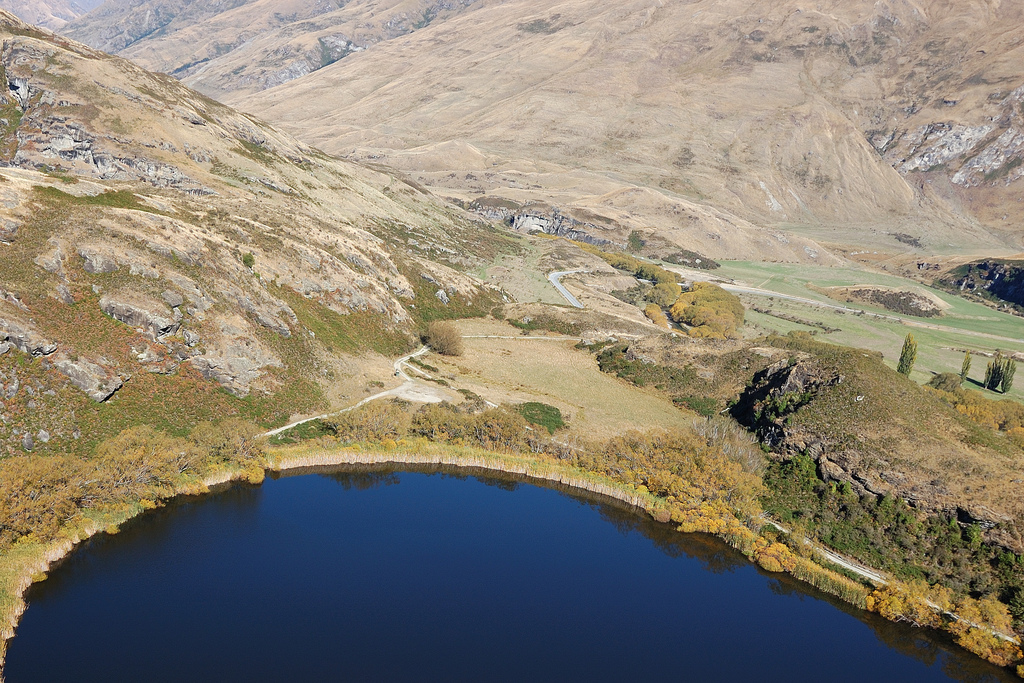
Skirt the edge of Diamond Lake and start the climb over the copious structures to the platform above Diamond Lake. You can see why the lake was named as such. Continue climbing past rock bluffs, scramble over some slippery sections in groves of scrub and then exit onto the grassy tops between schist outcrops.
Rocky Mountain Summit is reward and one of the finest view points around, especially considering its relatively low altitude. The descent continues past the short detour to Lake Wanaka Lookout and arrives back at Diamond Lake. Continue around the lake back to the parking area (with toilets).
Geology
The entire area around Mount Aspiring National Park and Lake Wanaka underwent glaciation over several periods during the last 2 million years. Each successive penetration by the glacial advances obliterated what had gone before.
During the last Pleistocene, with it’s maximum around 17,000 year ago, glaciers descended the Matukituki Valley and met with others at Lake Wanaka, excavating deep valleys. Advances carved the inclined beds of the schist rock.
One notable feature is known as a roche moutonee - or rock sheep. An outcrop of resistant rock has the effect of slowing a glacier in its tracks, arresting its flow and diminishing its erosive powers. An attenuated slope results. Conversely on the downstream side, an acceleration increases its erosive power, giving a steeper slope. Observed from a side view, the shape resembles a sheep - at least it did to French geologists who first described these features.
Rocky Mountain is one of these roche moutonees. Mount Iron in Wanaka is another.
Details
| Feature | Value | Info |
|---|---|---|
|
Organisation |
DOC OtagoCentral government organisation |
|
|
Location |
South Island ▷ Wanaka Region ▷ Wanaka Township |
|
|
Categories |
||
|
Directions To Coordinates |
||
|
Coordinates |







Nearby


Reviews
-
-
Short, good with infant, a wonderful view.
 Knorr Bracher
 -
Best view to Mt Aspiring.
female40 -
Beautiful three hour walk.
Mathilde -
Nice views, well maintained, is not stunning.
Marieke -
Short walk with amazing view.
Sapir Lifshitz
-
For me it was the best walk around Wanaka (including Roys Peak Track which is so famous) altough this walk was short.
View 360° on the top is phenomenal !!
-
-
Very nice moderate track.
Amazing view at the top over the diamond lake and mountains, worth it.
We did it because there was no space at the car parking at Roys Peak Track. Very good alternative!
-
Three hour walk return along the Diamond Lake up to the forestry hills of the Rocky Mountain.
Amazing 360 degree view from the Summit. Make sure to take the western route up so not to spoil the view in advance.
-
-
Steep climb at times - fantastic views of Wanaka lake.
Eastern path goes along a cliff edge at times. Easier descent on the Western Path.
-
Really nice 3.5 hours walk to the top of the mountain.
Track gets fairly steep towards the end. The track along the east side is nicely manicured, whereas the one along the west is more rugged. The top is pretty exposed and can get windy.
-
Lovely walk almost like a proper footpath!
Up to the rocky mountain for lovely views. A great walk!
-
-
View over the mountains is worth the walk but the lake itself is not for swimming and not very nice.
-
Spectacular view of Lake Wanaka!
If you are around it is a must do (in non rainy weather conditions). Some parts quite steep and a little muddy, so do not go in flip flops.
-
Great walk up to the Summit where you have a 360 degree view around.
Quite diverse track/hike. Really worth it! Bring plenty of water and sunscreen on a sunny day. Can be a bit slippery on rainy days, western track is easier.
-
-
Three hour walk.
Be prepared to climb. Take the eastern track which is easier. Awesome view from the top.
-
Beautiful three hour walk.
The eastern track is the easiest way to go up. The views from the top is amazing!
-
-
2 to 3 hours to get to the top, not too hard and a beautiful view on top over Lake Wanaka.
Great track!
-
Nice views, well maintained, is not stunning.
Toilet facilities present, about 1.5 hours walk return.
-
For me it was the best walk around Wanaka (including Roys Peak Track which is so famous) altough this walk was short.
View 360° on the top is phenomenal !!
-
-
Very nice moderate track.
Amazing view at the top over the diamond lake and mountains, worth it.
We did it because there was no space at the car parking at Roys Peak Track. Very good alternative!
-
Three hour walk return along the Diamond Lake up to the forestry hills of the Rocky Mountain.
Amazing 360 degree view from the Summit. Make sure to take the western route up so not to spoil the view in advance.
-
Steep climb at times - fantastic views of Wanaka lake.
Eastern path goes along a cliff edge at times. Easier descent on the Western Path.
-
Lovely walk almost like a proper footpath!
Up to the rocky mountain for lovely views. A great walk!
-
-
Really nice 3.5 hours walk to the top of the mountain.
Track gets fairly steep towards the end. The track along the east side is nicely manicured, whereas the one along the west is more rugged. The top is pretty exposed and can get windy.
-
-
View over the mountains is worth the walk but the lake itself is not for swimming and not very nice.
-
Spectacular view of Lake Wanaka!
If you are around it is a must do (in non rainy weather conditions). Some parts quite steep and a little muddy, so do not go in flip flops.
-
-
Great walk up to the Summit where you have a 360 degree view around.
Quite diverse track/hike. Really worth it! Bring plenty of water and sunscreen on a sunny day. Can be a bit slippery on rainy days, western track is easier.
-
Three hour walk.
Be prepared to climb. Take the eastern track which is easier. Awesome view from the top.
-
Beautiful three hour walk.
The eastern track is the easiest way to go up. The views from the top is amazing!
-
-
2 to 3 hours to get to the top, not too hard and a beautiful view on top over Lake Wanaka.
Great track!
-
-
-
Incredible walk near Wanaka Lake.
Not too difficult and an amazing 360 degree view from the summit. It is great to stay at the top and enjoy for a while.